Tropical
Open climate guide →JanWaitFebWaitMarWaitAprPlantMayPlantJunPlantJulPlantAugWaitSepWaitOctWaitNovWaitDecWait
Aim for April, May, June, July.
Grow for Beauty
A practical climate-by-climate planting calendar plus detailed starting, care, problem and safety guidance.
Australian planting calendar
Highlighted months are the usual planting window. A local nursery, seed packet and current weather forecast should take priority over a broad climate calendar.
Aim for April, May, June, July.
Aim for February, March, April, May, June, July, August.
Aim for February, March, April, May, June, July, August, September.
Aim for February, March, April, May, June, July, August, September.
Aim for February, March, April, May, June, July, August, September.
Aim for February, March, April, May, June, July, August, September.
Aim for February, March, April, May, June, July, August.
Start well
Sow direct. As a starting rule, cover seed by roughly twice its diameter, then follow the packet where it gives a different depth.
Feeding
Use compost before planting and a flower-forming feed only when the species benefits from it.
Water
Keep moist while establishing, then water deeply when the surface dries.
Maintenance
Remove spent flowers where appropriate and maintain airflow around new growth.
Harvest or display
Flowers in 12–16 weeks. Readiness varies with variety and weather; use colour, firmness, size and the supplier's maturity notes rather than the calendar alone.
Problems and companions
Aphids, thrips, snails, powdery mildew and grey mould can appear in crowded or damp growth.
Combine plants with matching water and sunlight needs, and stagger flowering times for a longer display.
People and pets
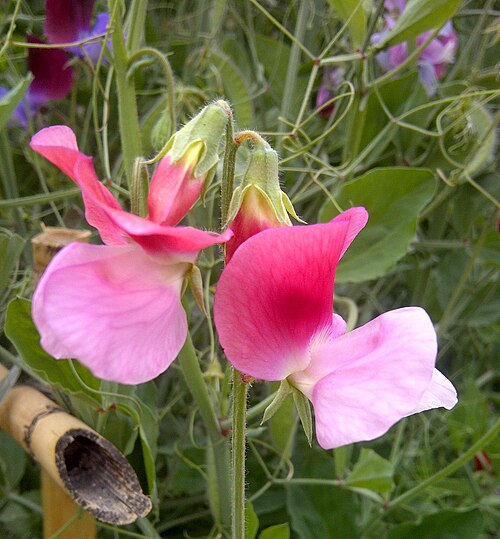
Seeds and pods are toxic if eaten. Do not confuse ornamental sweet peas with edible peas.
Moving plants
Check local weed, invasive-plant and interstate quarantine rules before sharing or moving unfamiliar plant material.
Transparent guidance
Patch gives a broad Australian starting point, not a guarantee for every variety or garden. Read the Patch methodology and sources, check the latest Bureau of Meteorology climate information, and confirm interstate restrictions through Australian Interstate Quarantine.
Last reviewed 3 September 2026